I've always been drawn to the beauty in imperfection — the wrinkle, the worn edge, the face marked by time. That's where the real story lives.
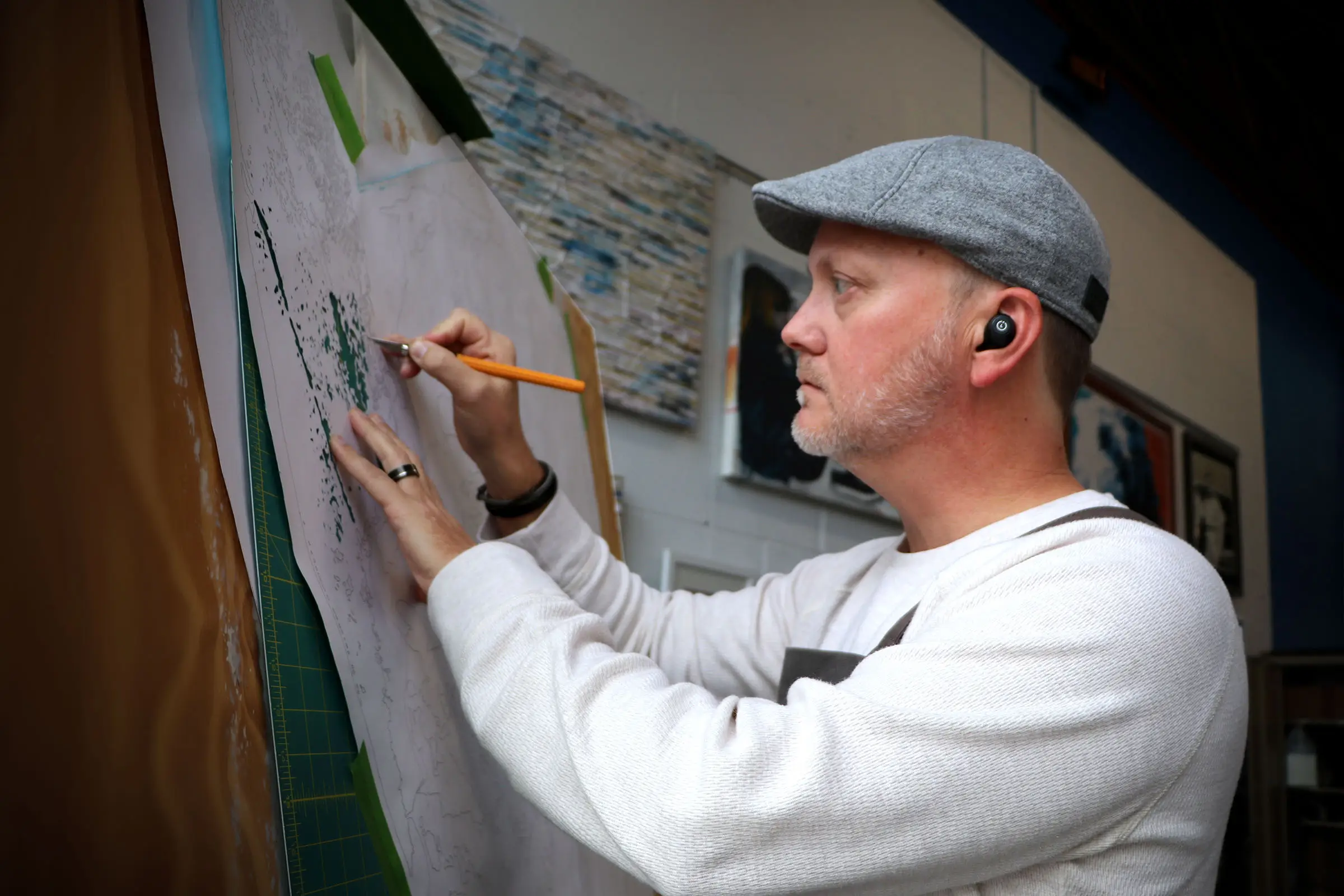
I've been making things with paper for as long as I can remember. As a kid, I bought a basic airbrush set and started painting model cars. It wasn't anything fancy — not like the mall airbrush artists in the '80s — but it got me going. I started making stencils so I could paint designs on t-shirts and vanity plates. I'd hand-draw the design, cut it out with a craft knife, and spray over it. They didn't have the soft gradients the expensive tools could do, but they were clean and sharp and I liked that.
It's kind of wild to think that almost 30 years later, I'm still using those same skills to make fine art.
I started out in a fine arts program in college, but I ended up switching to business after realizing that some of the required courses — sculpting, metalwork — weren't the kind of art I wanted to make. I loved design. I saw myself doing something like Darrin Stephens in Bewitched, pitching campaigns in a boardroom.
Around that same time, I started getting into web design, which was still pretty new. After a couple of years in television advertising, I moved into web design and stayed there for over 25 years. Along the way I taught myself Photoshop, Illustrator, and a lot of the graphic design fundamentals that I still use in my art today.

Now I bring all of that together. A lot of my pieces start on the computer before I ever pick up a knife. I use what I learned in graphic design — placement, the golden ratio, color — to set things up, and then the real work begins by hand.
The part I love most is when I start cutting and adding freehand lines. That's when I start to see if it's working. I never know exactly how it's going to turn out until I step back and look at the whole thing.
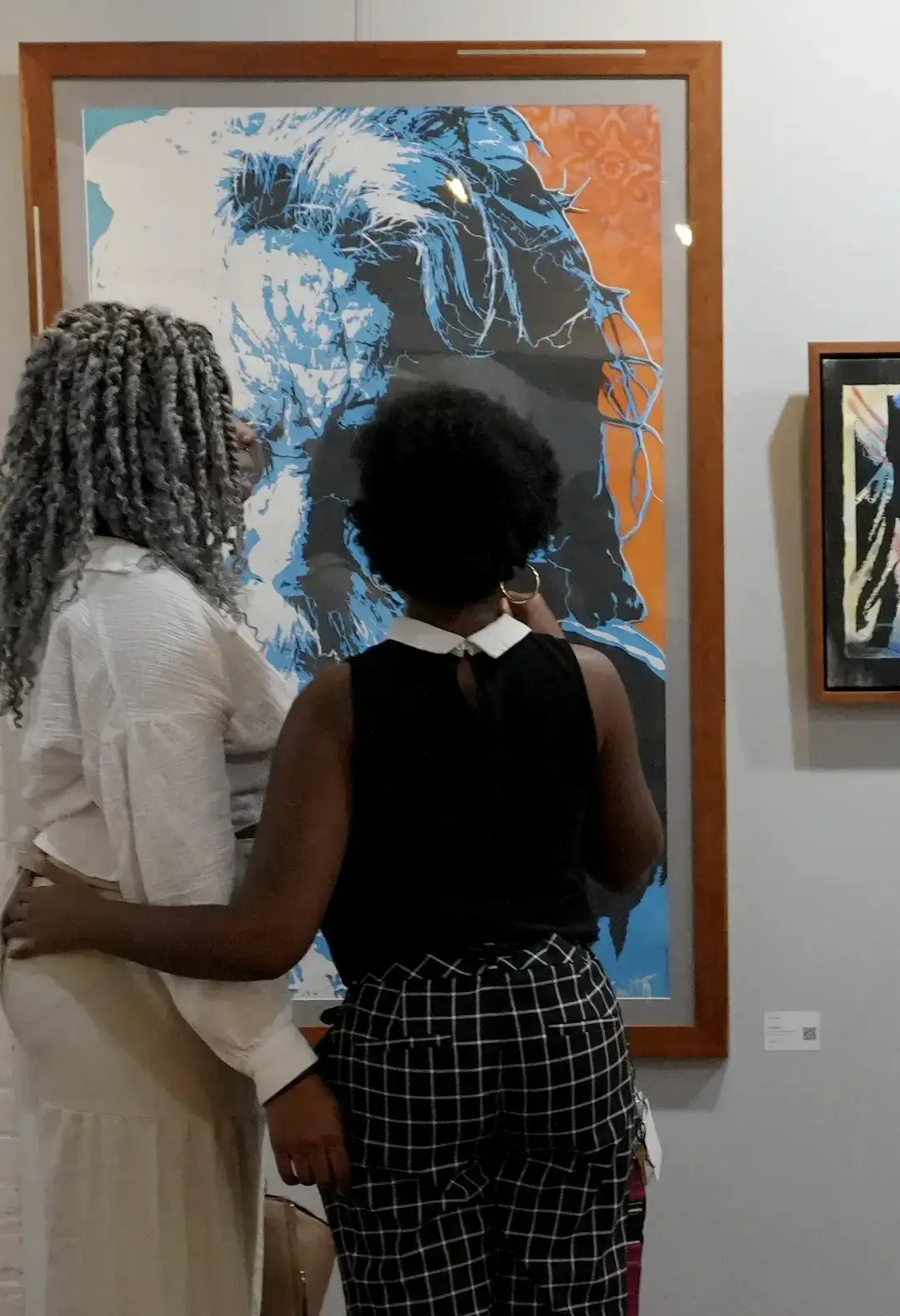
People's reactions to the hand-cut paper work are one of my favorite parts. From across the room, they see the design. But when they get close and realize it's layers of paper, all cut by hand — that's the moment. Photos don't always show that. You kind of have to see it in person.
My work starts with paper and a knife. I'm drawn to faces — the kind that have some years on them, some wear. There's something in the texture of aged skin that translates into beautiful cut lines, and that's usually where a piece begins for me.
The process is slow and deliberate. Every cut matters, every layer has a purpose. But what I keep coming back to is this: I can plan a piece down to the last detail, and it still surprises me.
I'm interested in the weight that simple materials can carry. Paper is ordinary. But when you cut into it and start layering, it can hold a lot more than you'd think.